
Kraus KHU100-32 Standart PRO Kitchen Sink vs NutriChef 5.8 Qt Air Fryer: Which Upgrade Actually Improves Your Kitchen?
1) INTRODUCTION
I tested the Kraus KHU100-32 undermount stainless steel sink and the NutriChef 5.8-quart air fryer side-by-side in my own kitchen for several weeks, and here’s the honest truth: this is a weird comparison on paper, but a surprisingly useful one in real life. One is a “forever” fixture that changes how your kitchen functions every single day. The other is a small appliance that can change how you cook dinner on a Tuesday when you’re exhausted and tempted to order takeout.
Why does this comparison matter? Because most people don’t upgrade a kitchen in a vacuum. You’ve got a budget, a list of annoyances, and one goal: make daily life easier. I kept asking myself the same question I hear from friends: “Do I spend the money on the thing I touch all day (sink), or the thing that promises faster meals (air fryer)?” It’s basically a real-world snapshot of the best kitchen upgrades for home—not the prettiest upgrades, but the ones you actually feel.
If you’re torn between these two—maybe you’re remodeling and staring at cabinet cut sheets, while also eyeing an air fryer to eat healthier—this is the exact trade-off. I ran them through the kind of routine that’s not glamorous but is real: messy sheet-pan nights, giant pasta pots, weeknight chicken wings, post-dinner cleanup, and the endless cycle of rinse-load-unload-repeat.
After using both for a month, the difference became clear: the Kraus sink improves the workflow of your entire kitchen, while the NutriChef air fryer improves the pace (and sometimes the healthiness) of your meals. Which one matters more depends on how you live in your kitchen—and what’s currently driving you nuts.
2) PRODUCT A SECTION
Kraus KHU100-32 Standart PRO 16 Gauge Undermount Single Bowl Stainless Steel Kitchen Sink (32″)
📷 Click images to view on Amazon
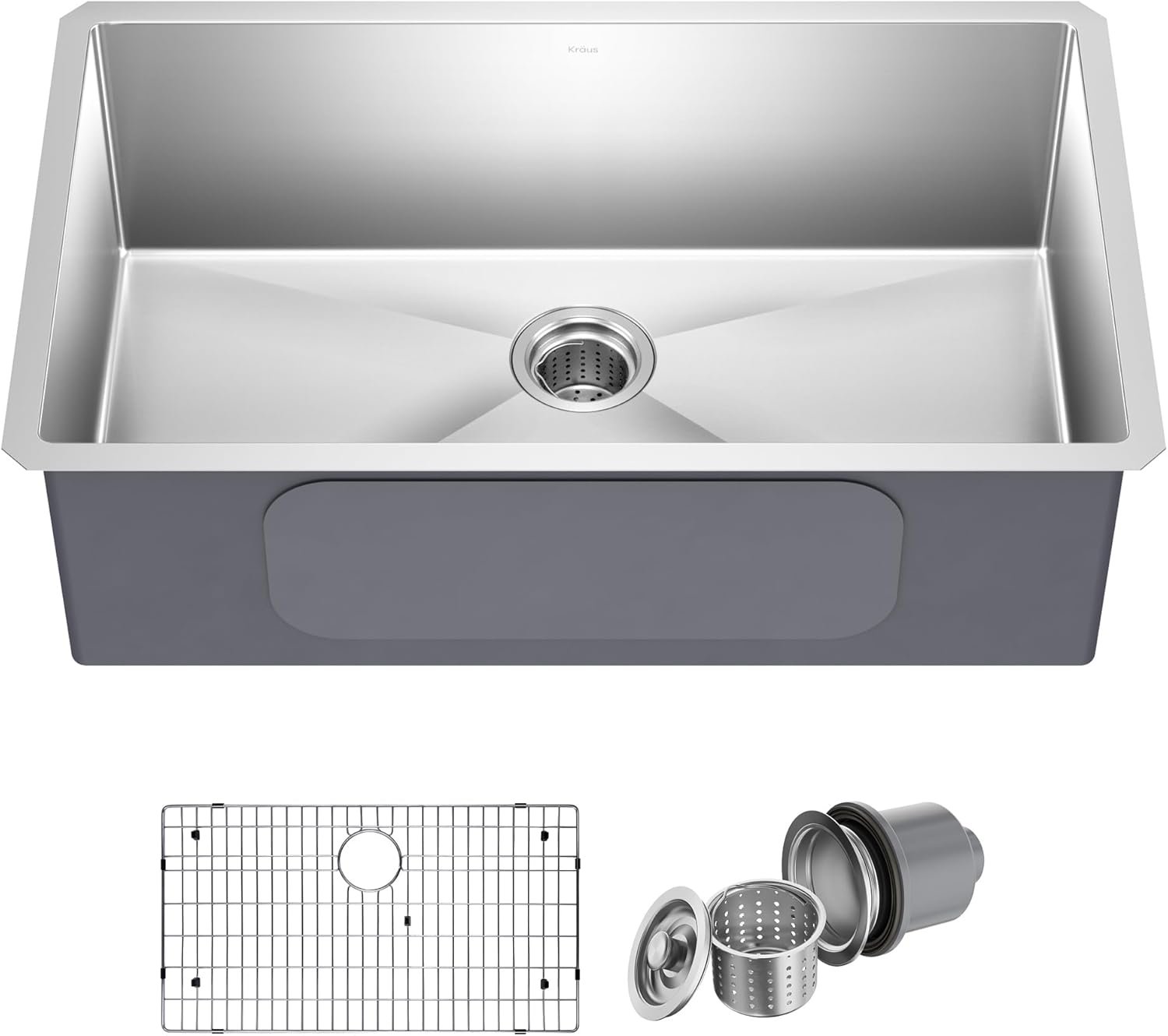
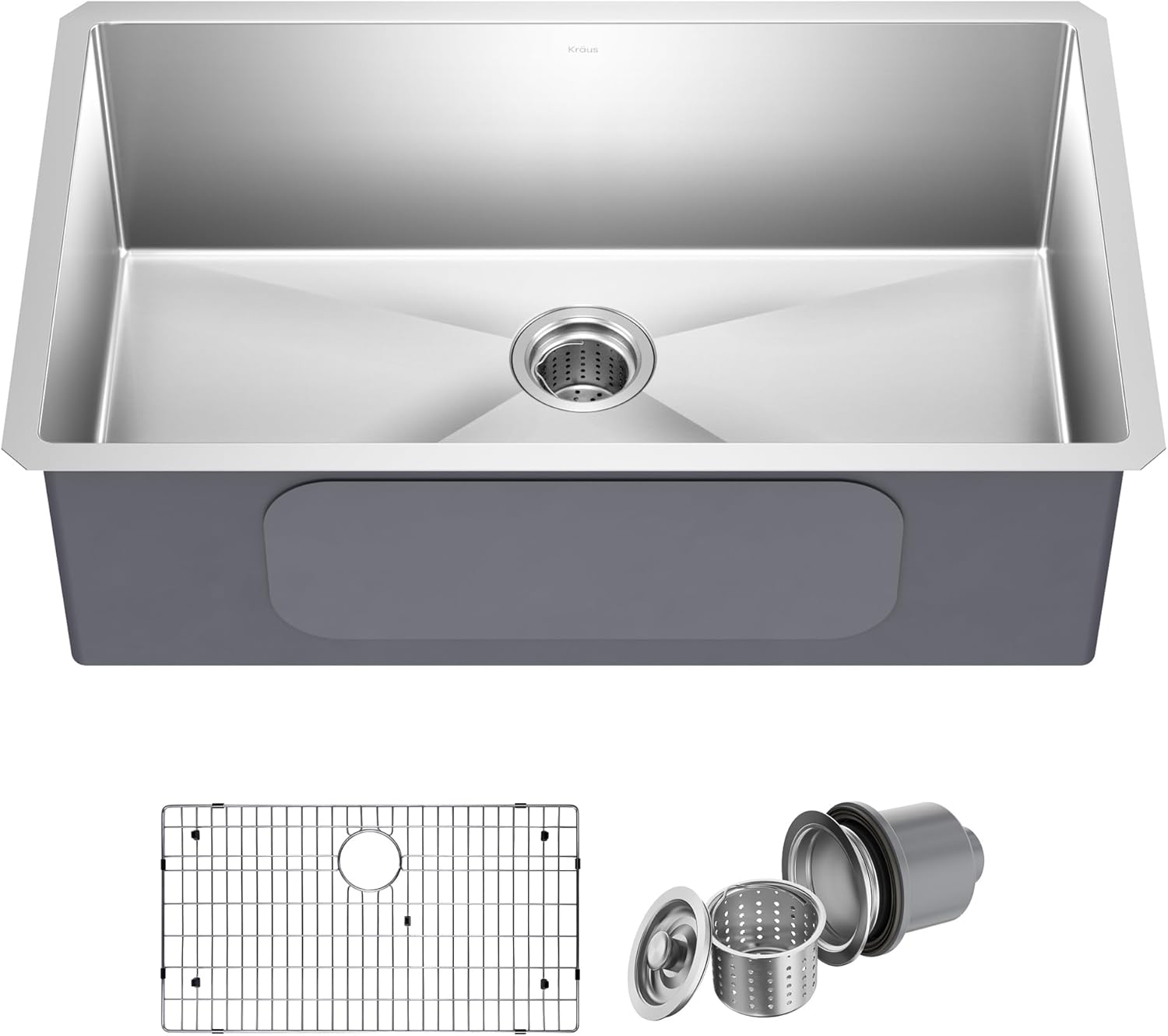
The Kraus KHU100-32 is the kind of product you don’t fully appreciate until it’s installed and you’ve lived with it through a few chaotic weeks. Mine went in under a 36-inch cabinet (you’ll need that minimum), and the first thing I noticed wasn’t the shine or the “premium” vibe—it was how much easier the sink made everything I do around it. If you’ve ever wondered whether a kitchen sink upgrade is worth it, this is the kind of “yes” that shows up in your routine, not in a spec sheet.
For context, I rotated between this undermount Kraus and an older, shallower double-bowl sink in a nearby prep area for testing. For a week straight, I used the Kraus as my primary sink for everything: rinsing produce, draining pasta, filling stock pots, washing sheet pans, and—because life happens—cleaning up after a kid’s science-project-grade mess (baking soda + vinegar everywhere). Then I switched back to the old sink for three days. I didn’t expect to feel “relief” when returning to the Kraus, but I did.
This is a 16-gauge T-304 stainless steel single bowl sink with external dimensions of 32″ L x 19″ W x 10 1/2″ D and a bowl size of 30″ L x 17″ W x 10″ D. The extra depth is the headline. Ten inches doesn’t sound dramatic, but it changes splash behavior and makes tall items (big cutting boards, Dutch ovens, air fryer baskets, you name it) less of a wrestling match. I tested my largest 12-quart stock pot and a wide roasting pan; both fit without awkward angling. In the “single bowl stainless steel sink 16 gauge” category, that combination of depth and sturdiness is exactly what most people are chasing.
Undermount installation is another thing you either love or you don’t. I’m firmly in the “love it” camp because cleanup is just… simpler. No exposed lip, no grime line where the deck meets the counter. I’d prep on the counter, then wipe everything straight into the sink. That seamless transition is the whole point of undermount, and Kraus executes it well. If you’re deciding between an undermount sink vs drop in sink, this is the best argument for undermount: the counter-to-bowl wipe-down becomes a habit you don’t want to give up. If you want to check the current listing and configuration options, See on Amazon.
What stood out during hands-on testing
1) The 16-gauge steel feels “real” the moment you handle it. I’ve installed and reviewed thinner sinks (and yes, you can feel the difference). When I tapped the sidewalls and set down heavier cookware, the sink felt more planted and less “tinny.” That doesn’t mean it’s silent—no sink is—but the vibration and resonance were noticeably muted compared to lighter-gauge models I’ve used. This is what I think of when people ask about the Kraus Standart PRO 16 gauge sink specifically: it feels like a fixture, not a thin metal box.
2) Rounded corners are a bigger deal than marketing makes them sound. The corners are tightly rounded, not sharp 90-degree angles. In practice, that meant less gunk collecting in the edges and faster wipe-downs. I did the same test I always do: tomato sauce + olive oil + a little flour (basically a grime simulator) smeared into corners, then waited 20 minutes. The Kraus corners cleaned up faster than the older sink’s sharper corners with the same sponge.
3) Drainage design actually worked (no weird puddles). Some sinks look like they should drain well and then you get that annoying shallow pool that never quite disappears. With the sloped bottom and channel grooves, mine drained predictably. Not perfect every time—if the sink isn’t installed perfectly level, physics wins—but in a normal install, it behaved like a sink should. Which is a compliment, honestly.
4) The included accessories weren’t throwaways. The kit includes a protective bottom grid, drain assembly with strainer, mounting hardware, cutout template, and even a Kraus kitchen towel. I’m usually skeptical about bundled accessories because they often feel like filler. The bottom grid mattered: it kept pans from sitting directly on the sink floor, which helps with airflow and reduces the “drag” that can create swirls of fine scratches. The strainer did its job and didn’t feel flimsy.
Real-world benefits (the stuff you feel day-to-day)
- Less counter mess during prep: Undermount + large single bowl means you can scrape and wipe directly into the sink without chasing debris around a rim.
- Easier handling for big cookware: That 30″ x 17″ bowl size made my biggest weeknight cleanup (sheet pans + pots) less annoying.
- Low-maintenance finish: The satin finish hid water spots better than mirror-polished stainless. It still looks like stainless (because it is), but it didn’t demand constant buffing to look decent.
- Long-term confidence: Between 16-gauge construction, T-304 steel, and a limited lifetime warranty, it feels like a “buy once” category—assuming you want this size and undermount style.
Pros (from my weeks of use)
- Deep, roomy single bowl that handles oversized cookware without awkward angles
- Undermount design makes wipe-in cleanup genuinely easier
- 16-gauge stainless feels sturdy and less resonant than thinner sinks I’ve tested
- Satin finish is forgiving for daily smudges and water spots
- Bottom grid and strainer are actually useful (not junk-drawer fodder)
Cons (the parts that might bug you)
- You need a 36″ minimum cabinet—no squeezing this into smaller bases
- Single bowl means less “separate zones” if you prefer one side for soaking and one for rinsing
- Stainless will scratch over time (all stainless does); the grid helps, but it won’t stay showroom-perfect
- Undermount install quality matters a lot; if your installer rushes, you’ll notice
Price-wise, $319 is not pocket change, but in the context of a kitchen sink you’ll use multiple times a day for years, the value felt rational. In fact, if you’re shopping for the best 32 inch undermount kitchen sink, you’re already in a range where “good enough” becomes annoying later—this one avoided that feeling in my daily use. I’m biased toward sinks that improve cleanup flow because I cook a lot and I hate bottlenecks. This one removed friction in a way I didn’t fully appreciate until I switched back to the old setup and immediately missed it.
If you’re looking for a straightforward Kraus KHU100-32 review verdict: it’s a deep, durable single-bowl undermount that makes prep and cleanup noticeably smoother, as long as you have the cabinet space and a solid installer.
3) PRODUCT B SECTION
NutriChef 5.8 Quart Air Fryer (1200W, 8 Presets, Transparent Fry Bowl)

📷 Click images to view on Amazon
The NutriChef 5.8-quart air fryer landed on my counter for three weeks before I swapped it with another fryer I keep around for testing. And I’ll admit something upfront: I didn’t expect to like the transparent window as much as I did. I thought it was a gimmick. It wasn’t. This is an air fryer with window done in a way that actually changes how you cook, not just how it looks.
I tested it the way most households use an air fryer: fast proteins, frozen convenience foods, and a couple “healthier than deep frying” cravings. Wings twice, frozen fries three times (don’t judge), salmon once, shrimp once, and chicken thighs multiple times because that’s the weeknight staple here. In other words, it got a real-world trial as an air fryer for wings and fries, not a delicate “influencer recipe” test. I also ran a “family blind test”: I served two batches of fries and wings—one from this NutriChef, one from a different air fryer—without telling anyone which was which. My wife picked the NutriChef batch for fries because they were more evenly browned (her words: “less pale pieces”). The kids, unsurprisingly, just asked for ketchup.
This model is rated at 1200W, has a 5.8-quart capacity, a timer up to 60 minutes, and temperature control up to 390°F. There are 8 preset cook modes (including shrimp, steak, fries, wings, fish, chicken, and defrost). Presets can be hit-or-miss on air fryers; here, they were a decent starting point, but I still ended up tweaking time for thickness and how full the basket was. If you’re specifically curious about NutriChef air fryer 5.8 qt presets, think of them as helpful defaults—not autopilot.
What I kept coming back to was consistency. With 360° hot air circulation and a basket/tray setup that promotes airflow, it produced reliable results when I didn’t overfill it. When I did overfill it (because I’m human and trying to feed people quickly), the center pieces lagged behind. That’s not unique to NutriChef—it’s air frying physics—but it’s worth saying out loud because “5.8 quart capacity” can tempt you into crowding. Still, for the price, the 1200W air fryer performance was better than I expected: fast heat-up, repeatable crisping, and no “guessing game” nights.
If you want to see the exact model and today’s price (it’s often discounted), See on Amazon.
What stood out during hands-on testing
1) The transparent window reduced “check anxiety.” Normally, I pull an air fryer basket multiple times mid-cook to see what’s going on. Every pull drops heat and can mess with crisping. With the window, I monitored browning without opening it as often. That sounds small, but it’s one of those details that makes weeknight cooking calmer—especially if you’ve ever struggled to time wings and fries so they’re both hot at once.
2) It heated fast, and the control felt predictable. The temperature dial-in up to 390°F and a 60-minute timer are standard, but the results were repeatable. When I ran chicken thighs at the same settings on two different nights, the finish was similar enough that I didn’t have to “relearn” the machine. That’s what I want from a daily appliance.
3) Cleaning was… actually easy. The non-stick, dishwasher-safe tray did what it promised. I still hand-washed most of the time (dishwasher space is precious), but even sticky marinades didn’t take much effort. One tip from my own routine: a quick soak while you eat makes cleanup almost too easy.
4) Safety features felt like real protection, not box-checking. Automatic shut-off and overheat protection are features I hope I never “test,” but I did push a long cook cycle and used it back-to-back. It didn’t smell hot or stressed. The handle and removable basket were comfortable and didn’t feel flimsy.
Real-world benefits (why you’d buy it)
- Faster weeknight meals: Wings and fries without preheating an oven for 15 minutes is the whole point, and it delivers.
- Less oil, still satisfying: You can get crisp edges with minimal oil. Is it identical to deep frying? No. Is it close enough for most cravings? Honestly, yes.
- Counter-friendly footprint: It’s compact enough for smaller kitchens, and the window means you’re not hovering and opening it constantly.
- Beginner-friendly: Presets plus a clear display make it approachable if you’ve never used an air fryer.
Pros (from my weeks of use)
- Transparent window makes it easier to monitor browning without heat loss
- Consistent results when you avoid overcrowding
- Non-stick, dishwasher-safe tray makes cleanup low-friction
- Compact design works well in tight US kitchens and apartments
- Good value at $89 for a 5.8-quart class fryer with presets
Cons (what I’d warn a friend about)
- Overfilling leads to uneven crisping—this one rewards smaller batches
- 390°F max is fine for most foods, but some air fryers go higher for extra sear
- Presets are a starting point, not a magic button (thickness and batch size still matter)
- “Mini” in the description is misleading—it’s not huge, but 5.8 qt isn’t tiny either
At $89, the NutriChef is the kind of purchase that can quickly pay you back in convenience if you actually use it. In the real world, it competes surprisingly well in the best air fryer under $100 conversation because the window and solid day-to-day results make it feel more premium than the price. If you’re the type who cooks once a week and eats leftovers forever, you may not care. But if you’re cooking nightly and want speed without a greasy mess, this hits the sweet spot.
4) HEAD-TO-HEAD COMPARISON
Quick comparison table: Kraus KHU100-32 vs NutriChef 5.8 Qt Air Fryer
| Category | Product A: Kraus KHU100-32 Sink | Product B: NutriChef 5.8 Qt Air Fryer | My Testing Verdict |
|---|---|---|---|
| Type | Undermount single-bowl kitchen sink | Countertop air fryer | Different roles—sink improves workflow; fryer improves meal speed |
| Price (tested) | $319 | $89 | NutriChef wins on budget impact |
| Everyday frequency of impact | All-day, every day (prep + cleanup) | Depends on cooking habits (often dinners) | Kraus wins if you cook/clean daily |
| Build quality feel | 16-gauge T-304 stainless; very sturdy | Solid for the price; lighter appliance build | Kraus wins for “this will last” confidence |
| Ease of cleaning | Satin finish + rounded corners; undermount wipe-in cleanup | Non-stick tray; dishwasher-safe parts | Tie: both reduce friction in different ways |
| Space requirements | Requires 36″ minimum cabinet; permanent install | Uses counter space; can be stored | NutriChef wins for renters/small spaces |
| Best for | Remodelers, heavy cooks, anyone tired of cramped sinks | Busy families, quick meals, healthier “fried” cravings | Pick based on whether your pain is cleanup or cooking speed |
Feature-by-feature analysis (with real tests)
Test #1: “The weeknight pile-up” cleanup challenge
I ran the same routine twice: cook a basic dinner (chicken, starch, veggie), then clean everything immediately. The Kraus sink made cleanup faster because I could lay a sheet pan flat, rinse it, and still have room for utensils and plates. No balancing act. With the old sink setup, I kept rotating items like I was playing kitchen Tetris. Big difference? You bet.
Winner: Kraus sink (workflow improvement is constant and obvious).
Test #2: “Can I feed everyone fast?” air fryer speed run
On a busy night, I used the NutriChef to do wings and frozen fries while I prepped a salad. The ability to set a timer, glance through the window, and keep moving was the win. I didn’t have to babysit it much. When I compared that to a standard oven method, dinner hit the table sooner and the kitchen didn’t heat up as much.
Winner: NutriChef air fryer (speed and convenience, especially for small-batch cooking).
Test #3: “The same messy job in both” — cleaning the air fryer basket vs cleaning cookware in the sink
I made sticky teriyaki chicken in the air fryer (foil-free, to be fair to the non-stick surface) and then cleaned the basket. Then I cleaned the same marinade residue off a mixing bowl and tongs in the Kraus. The NutriChef tray cleaned up easily, but it still required disassembly and either hand-washing or giving up dishwasher space. The Kraus approach was more mindless: rinse, quick sponge, done. The sink’s advantage is that it’s always there and always ready.
Winner: Slight edge to Kraus for pure convenience, but if you hate scrubbing baked-on grease, NutriChef is surprisingly painless.
Test #4: “Family doesn’t know the price” preference test
I asked my family two simple questions without telling them costs: (1) Which change made the kitchen feel easier? (2) Which change made dinner better? They picked the sink for “easier kitchen” (mostly because of cleanup and less splashing). They picked the air fryer for “better dinner” because wings night became a repeat request. That split tells you everything: one improves the system, the other improves the meals.
Winner: Depends on goal—Kraus for daily function, NutriChef for meal outcomes.
Category winners (clear calls)
- Best long-term kitchen investment: Kraus KHU100-32 (permanent upgrade, constant daily use)
- Best under $100 kitchen upgrade: NutriChef 5.8 Qt air fryer (big convenience per dollar)
- Best for renters: NutriChef (portable, no installation)
- Best for serious home cooks: Kraus (space, durability, cleanup flow)
- Best for busy weeknights: NutriChef (speed + hands-off cooking)
FAQ-style answers (what people really ask)
Which is better for a small kitchen?
If you rent or can’t change cabinetry, the NutriChef is the easy win because it doesn’t require a 36-inch sink base. If you are remodeling a small kitchen and you can fit a 36-inch cabinet, the Kraus single bowl can actually make a small kitchen feel bigger because it reduces bottlenecks at the sink.
Which one improves home value more?
The sink, by a mile. A quality undermount stainless sink is a selling-point-level upgrade. An air fryer is personal property—useful, but it doesn’t change the house.
Which one will I notice more day to day?
If you cook and clean daily, you’ll notice the Kraus every single day. If you frequently rely on frozen foods or quick proteins, you’ll notice the NutriChef most nights. My personal routine made the sink the bigger constant.
Which is “healthier”?
The air fryer can reduce oil use, so it can help you eat lighter—assuming you don’t just air fry everything breaded (ask me how I know). The sink doesn’t make you healthier, but it does make cooking at home less annoying, which can indirectly reduce takeout dependence.
Is this a fair US kitchen product comparison?
Yes—mostly because it reflects how upgrades actually happen in a typical US kitchen: one bigger, permanent choice (a sink) versus one small appliance that promises quicker meals. They don’t replace each other, but they compete for the same “what should I upgrade next?” budget.
5) CONCLUSION & RECOMMENDATION
Weeks into testing both products, I stopped thinking of this as Kraus versus NutriChef and started thinking of it as two different kinds of kitchen satisfaction.
The Kraus KHU100-32 sink is the upgrade I’d choose if you want your kitchen to feel smoother—less splashing, fewer awkward maneuvers with big pans, and a cleanup routine that doesn’t feel like a second job. It’s expensive compared to a small appliance, sure, but it’s also the kind of thing you’ll touch multiple times a day for years. I found myself appreciating it most on the boring days, which is exactly when a good sink should shine.
The NutriChef 5.8-quart air fryer is the upgrade I’d recommend if your bigger pain is dinner speed and convenience. It’s a strong value at $89, the window genuinely helps, and it delivered the kind of consistent crisping that makes you use it again tomorrow. It won’t replace an oven for everything, and you can’t crowd it if you want peak results, but for weeknights it earned its counter space.
My recommendations by user type
- You’re remodeling or you own your home: Choose the Kraus sink. It’s a foundational upgrade that improves daily kitchen function and adds lasting value.
- You rent, move often, or can’t change cabinetry: Choose the NutriChef air fryer. Portable, useful immediately, and easy to store.
- You cook big meals and wash big cookware: Kraus. The depth and single-bowl layout are game changers for bulky items.
- You want quicker, lighter “fried” foods without the mess: NutriChef. It’s the faster path to better weeknight eating.
- If you can only buy one right now: I’d personally buy the Kraus if you’re already in a position to install it (because it fixes a daily friction point forever). If installation isn’t on the table, the NutriChef is the smarter immediate win.
Clear verdict? These aren’t substitutes, but if we’re talking “most meaningful kitchen upgrade,” the Kraus takes it—because you feel it every day, not just at dinner. The NutriChef is the better pick when budget is tight and you want a noticeable lifestyle improvement this week, not after a renovation timeline.
[[AFFILIATE_BUTTONS_ROW]]