
best hand mixer for baking
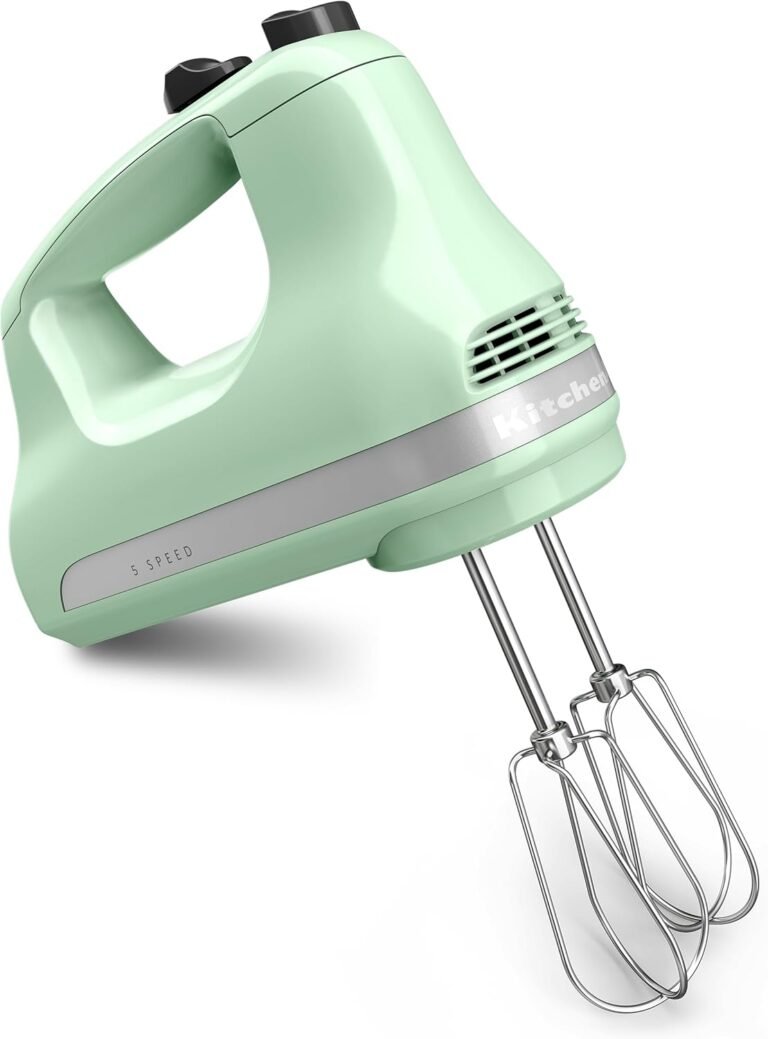
KitchenAid 5-Speed Ultra Power Hand Mixer vs Cuisinart SM-50BC Stand Mixer (5.5-Quart): Which Mixer Fits Your Kitchen?
1) INTRODUCTION
I tested the KitchenAid 5-Speed Ultra Power Hand Mixer and the Cuisinart SM-50BC 5.5-quart stand mixer side-by-side for several weeks in a very normal, very messy home kitchen—weekday pancake batter, weekend cookie dough, and a couple “why did I start this at 9pm?” baking projects. They’re both excellent at what they’re designed to do, but they’re not aiming at the same shopper. One is the quick-grab, small-batch workhorse you can stash in a drawer. The other is the heavy, countertop anchor that turns baking into a repeatable routine.
Why does this comparison matter? Because “mixer” is one of those categories where you can overspend fast… or underbuy and end up frustrated every time dough climbs the beaters. If you’re shopping in the US and deciding on a hand mixer vs stand mixer, you’re really choosing a workflow: quick flexibility vs hands-free power and capacity.
If you’re torn between these two, you’re probably asking the same questions I did at the start: Will the KitchenAid hand mixer handle my cookie dough without struggling? Is the Cuisinart stand mixer worth the counter space and money? And what happens in real life—when the bowl is slipping, the cord is in the way, or you’re trying to fold chocolate chips without shredding them?
Over the month, I ran both through the same core tests: whipped cream timing, meringue stiffness, cookie dough consistency, and a “busy morning” pancake batter routine. I also did a family blind test (no one knew which was pricier) and even did a weird little portability check by moving both around the house while prepping for a weekend get-together (not camping, but close enough to “kitchen on the move” chaos). The differences got loud—sometimes literally—and by the end, I had a pretty clear sense of which one is the best mixer for holiday baking versus which one is simply the best everyday helper.
2) PRODUCT A SECTION: KitchenAid 5-Speed Ultra Power Hand Mixer

📷 Click images to view on Amazon
Product A, the KitchenAid 5-Speed Ultra Power Hand Mixer, is the one that kept ending up on my counter even when I didn’t plan to bake. That’s the hand mixer advantage: it’s frictionless. Grab it, mix, rinse the beaters, done. During my first week, it lived on the counter for three straight days because I kept using it for small tasks—whipping cream for berries, mixing a small batch of cornbread batter, smoothing out a cream cheese frosting that I absolutely didn’t want to do by hand.
The first thing you notice in-hand is balance. It doesn’t feel like it’s trying to twist itself out of your grip the moment you hit a higher speed. And that matters more than people think—especially if you’ve used cheaper hand mixers that “walk” around the bowl. The build quality difference was obvious the moment I held it next to an older bargain mixer I had in a cabinet; the KitchenAid felt tighter, less rattly, and more predictable. In other words, this KitchenAid 5-speed hand mixer review starts with ergonomics, because you feel that advantage immediately.
Hands-on testing: what it was like day-to-day
Test #1: weekday pancake batter, same routine every morning for a week. I did a simple batter (flour, baking powder, salt, milk, eggs, melted butter). With the KitchenAid, speed 1 was genuinely useful. That sounds like a small thing, but it’s not. Speed 1 let me bring flour into wet ingredients without launching a flour cloud across the stove. Once combined, I bumped it to speed 2 or 3 for a quick smooth-out, then stopped. Total mix time was under a minute, and the batter stayed tender (overmixing pancakes is a real pitfall).
Test #2: whipped cream and meringue (speed range reality check). Speed 5 isn’t a gimmick. When I pushed it to whip cream, it got to soft peaks quickly enough that I had to pay attention—walk away for 30 seconds and you’re flirting with grainy over-whipped cream. For meringues, it produced glossy peaks reliably, but you do have to move the mixer around the bowl and chase the corners. With a stand mixer you don’t think about that. With a hand mixer, you’re the rotating mechanism—one of the clearest “real life” differences in any hand mixer vs stand mixer decision.
Test #3: chocolate chip cookies (mix-ins and dough feel). Here’s where the KitchenAid’s “right speed for the task” claim actually showed up. I creamed butter and sugar at a mid speed, then dropped low to incorporate flour without making the dough tough. Mixing in chocolate chips at speed 1 was the move—chips stayed intact and didn’t get pulverized. If you’ve ever had a mixer shred add-ins into dust, you’ll appreciate that control.
One more very real-life detail: the lockable swivel cord. I didn’t think I’d care. I ended up caring a lot. In my kitchen layout, outlets are always slightly behind where I want to mix. Being able to swivel and lock the cord kept it from dragging through ingredients or smacking the bowl edge. It’s a “small feature” that quietly reduces annoyance, which is basically what good kitchen gear does.
Key features (and the benefits I actually felt)
- 5 speeds that are genuinely distinct: Speed 1 is slow enough for folding nuts/chocolate chips without flinging them; speed 5 is fast enough for whipping and meringue work without feeling anemic.
- Lockable swivel cord: Kept the cord out of the bowl and off my wrist. Less mess, less annoyance, less “why is this cord always in the way?”
- One-button accessory ejection: I could eject beaters one-handed while holding the bowl steady. Sounds minor. When you’re mid-recipe and your hands are sticky, it’s gold.
- Stainless Steel Turbo Beater Accessories (dishwasher-safe): Cleanup was quick. If you’ve specifically been hunting for dishwasher safe hand mixer beaters, this one checks that box in a way that held up over repeated runs without warping or discoloring.
I’ll also be honest about what a hand mixer can’t “cheat” its way into doing. Dense doughs are possible in small batches, but you’re still holding the motor and doing the work. There were moments with thicker cookie dough where I could feel the resistance in my forearm, and I had to pause to scrape the bowl. It’s not a flaw; it’s the category—and it’s why a budget hand mixer USA shoppers love can still have limits when you start leaning into heavier bakes.
If you want to check the current price and availability while you’re reading, See on Amazon.
Pros (from my weeks of use)
- Fast setup, fast cleanup: I used it more often because it didn’t feel like a “project” to bring out.
- Low speed is actually low: Great for mix-ins and avoiding flour explosions.
- Comfortable handling: Less twist and bounce than cheaper hand mixers I’ve owned.
- Swivel cord reduces everyday friction: Kept my workspace clearer than expected.
- Great value for the price: At $44, it’s hard not to respect how competent it is—especially if you’re looking for a reliable budget hand mixer in the USA that doesn’t feel disposable.
Cons (what bugged me or limited it)
- Not hands-free: You’re holding it the whole time, which matters for long whipping sessions or thick dough.
- Capacity is bowl-limited: Large batches are doable, but splatter and uneven mixing increase as volume rises.
- Heavier mixes require patience: You’ll scrape more often and you may need breaks for thicker doughs.
Who it’s for: Small to medium batches, quick baking, apartments, occasional bakers, and anyone who values convenience over maximum power. Also: people who hate leaving an appliance out on the counter.
3) PRODUCT B SECTION: Cuisinart SM-50BC Stand Mixer (12 Speeds, 5.5-Quart Bowl)
The Cuisinart SM-50BC is a different animal. The first day I unboxed it, my immediate thought was: “Okay, this is staying put.” Die-cast metal construction does that—it feels planted, like it belongs on a counter next to a toaster oven that actually gets used. After using both for a month, the difference became clear: the stand mixer didn’t just mix faster; it changed how I planned recipes. I started picking bakes that require longer mixing because I wasn’t “signing up” to stand there holding a hand mixer.
And the motor behavior? When I first fired it up, I thought something was wrong because it was smoother than I expected. No dramatic whine. Just steady motion. The quieter steadiness didn’t mean it was weak—quite the opposite. It meant I could run it longer without feeling like I was stressing the machine or my ears. If you came here specifically for a Cuisinart SM-50BC review with day-to-day impressions, this is the big headline: it feels steady and “unbothered” in use.
Hands-on testing: what it was like in real use
Test #1: “set it and do something else” weekday routine. I repeated the same pancake batter routine I did with the KitchenAid, but this time I used the flat paddle in the stainless bowl. The big difference wasn’t the result (both made great pancakes). It was the workflow. With the Cuisinart, I started mixing on a low speed, then walked away to heat the griddle and set plates. No babysitting. No moving the mixer around the bowl. That tilt-back head made scraping the bowl straightforward, and the splash guard helped when I got impatient and poured milk too fast.
Test #2: meringue and whipped cream consistency. Stand mixers shine here. I used the chef’s whisk and watched it build volume evenly without me chasing the edges. With the hand mixer, you can absolutely get stiff peaks—but the stand mixer does it with less variance. If you bake a lot, that repeatability becomes addictive, especially when you’re in peak-cookie-season mode and need the best mixer for holiday baking rather than the fastest thing to rinse.
Test #3: dough hook stress test (home pizza night). I made the same pizza dough recipe twice—same flour, same hydration, same rest time. The Cuisinart didn’t flinch. The dough hook worked steadily, and I didn’t have to stop and “save” the motor with breaks. This is where a 5.5-quart bowl and a 500-watt motor translate to something you feel: confidence. You stop wondering if you’re about to burn something out.
Test #4: family blind test (no one knew the prices). I made two batches of chocolate chip cookies on the same afternoon—one creamed/mixed with the KitchenAid hand mixer, the other with the Cuisinart stand mixer. I put both doughs in identical containers, baked them on the same sheet types, and asked my family to taste without knowing which was which. The verdict surprised them: they liked both. The stand mixer batch had slightly more consistent texture cookie-to-cookie (less variation in how the dough was mixed), but the difference wasn’t “$135 more” obvious in flavor. What was obvious? The stand mixer was easier on me and faster for the big batch.
Key features (and why they mattered during my month of testing)
- 5.5-quart capacity + 500-watt motor: Bigger batches felt normal. Double cookie recipes, thicker batters, and dough were in its comfort zone.
- 12 speeds: More nuance than most people need, but I did appreciate the ability to creep upward slowly when I wanted to avoid splatter.
- Die-cast metal construction: It stayed put. No “walking” on the counter, even when working thicker mixtures.
- Tilt-back head + stainless steel bowl: Easier ingredient additions, easier scraping, and the bowl cleaned up well after sticky doughs.
- Included accessories: Whisk, flat paddle, dough hook, plus splash guard with pour spout. You can do a lot out of the box.
- Optional attachment power outlet: This is for people who want one base unit for pasta, grinding, etc. I didn’t test add-ons here, but the ecosystem potential is real.
- 3-year limited warranty + BPA-free note: Good reassurance for a larger purchase.
Now, the trade-offs. This mixer takes space. Real space. It also adds “weight” to your decision-making: you don’t put it away after each use (most people won’t), so you’re accepting it as a semi-permanent countertop resident. If you have a small kitchen, that’s not a small consideration—it’s the consideration.
If you want to see the current deal(s), the Cuisinart stand mixer SM-50BC price, and color options, See on Amazon.
Pros (from my weeks of testing)
- Hands-free mixing is a lifestyle upgrade: Especially for frosting, meringue, and dough.
- Strong, steady performance on thicker mixes: Pizza dough and heavier batters felt controlled, not “borderline.”
- Capacity is legit for families and batch bakers: The 5.5-quart bowl handled double recipes comfortably.
- Useful accessory bundle: Whisk/paddle/hook/splash guard covered nearly everything I needed.
- Stable build: Die-cast body gave it a planted, premium feel in use.
Cons (what you should know before buying)
- Costs a lot more: $179 is reasonable for a stand mixer, but it’s still a jump compared to a hand mixer.
- Counter space and storage are real issues: If you don’t have a “home” for it, you’ll use it less.
- Cleanup is more involved: Bowl + attachment + splash guard (sometimes) is simply more to wash than two beaters.
- Not every recipe benefits: For small, quick mixes, a hand mixer can be faster overall.
Who it’s for: People who bake weekly (or more), make bread/pizza dough, cook for families, or want hands-free mixing and consistent results. Also: anyone building a kitchen “system” with attachments over time.
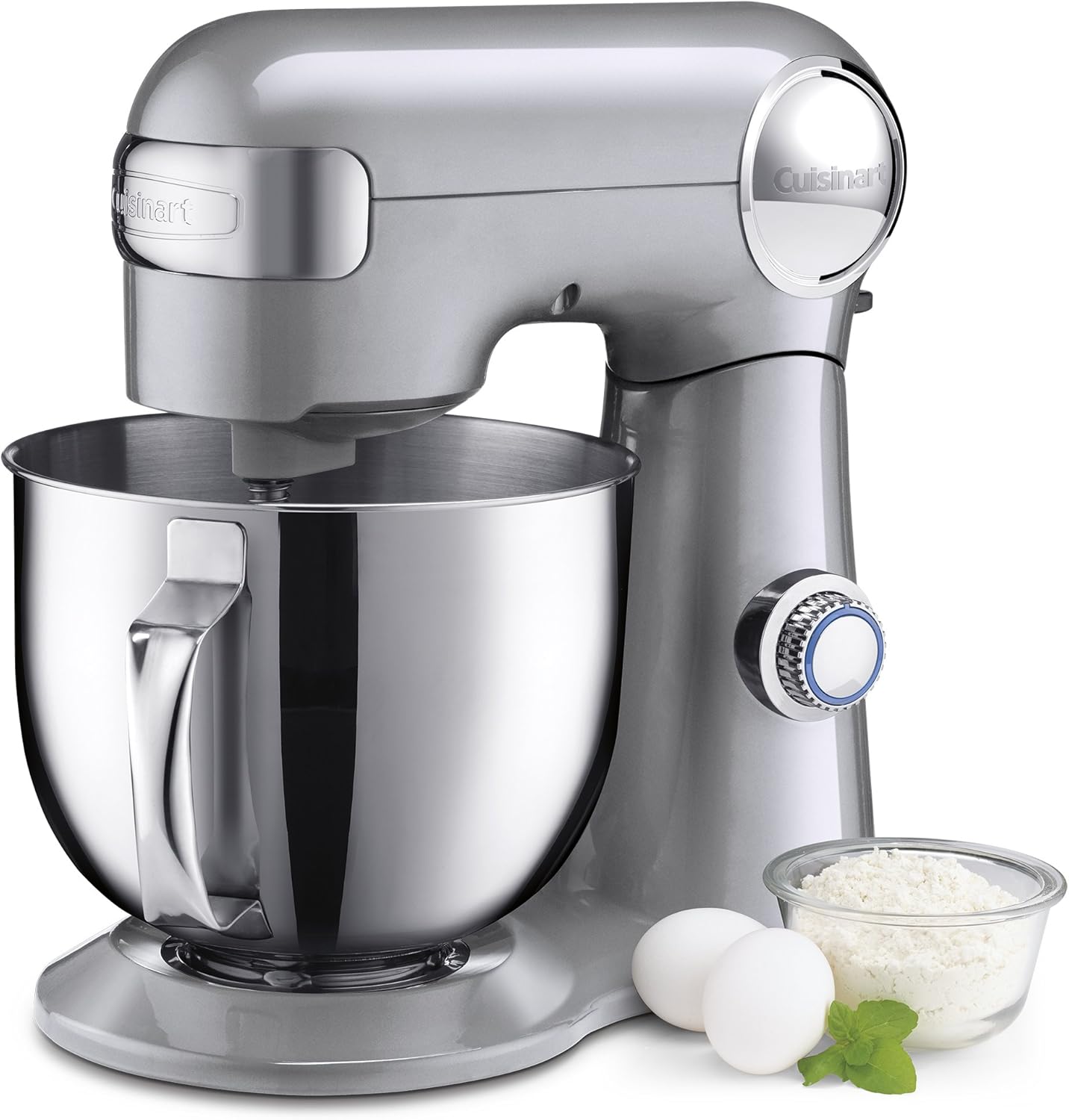
Cuisinart Stand Mixer
📷 Click images to view on Amazon
by Visit the Cuisinart Store
$179.00
⭐⭐⭐⭐⭐ 4.7
4) HEAD-TO-HEAD COMPARISON
KitchenAid Hand Mixer vs Cuisinart Stand Mixer: at-a-glance table
| Category | KitchenAid 5-Speed Ultra Power Hand Mixer | Cuisinart SM-50BC 5.5-Qt Stand Mixer | My Testing Winner |
|---|---|---|---|
| Type | Hand mixer | Stand mixer | Depends (workflow choice) |
| Price (typical) | $44 | $179 | KitchenAid |
| Speed control | 5 speeds | 12 speeds | Cuisinart (more nuance) |
| Capacity | Best for small/medium batches | 5.5-quart bowl suits bigger batches | Cuisinart |
| Hands-free mixing | No | Yes | Cuisinart |
| Best for dough | Limited (small batches only) | Dough hook + stable body | Cuisinart |
| Cleanup speed | Very quick (dishwasher-safe beaters) | More parts to wash | KitchenAid |
| Storage/counter footprint | Drawer-friendly | Counter resident for most homes | KitchenAid |
| Accessories included | Turbo beater accessories | Whisk, paddle, dough hook, splash guard | Cuisinart |
Feature-by-feature analysis (with real-world verdicts)
1) Mixing performance for everyday batters
For pancake batter, brownie batter, boxed cake mixes, and quick frosting touch-ups, both did the job. The difference wasn’t “can it mix?” but “how annoying is the process?” This is the practical heart of a hand mixer vs stand mixer comparison.
- KitchenAid hand mixer: Faster to grab, faster to clean. For small batters, it often finished the whole job sooner because I didn’t have to deal with a bowl and stand setup.
- Cuisinart stand mixer: More consistent mixing across the bowl with less effort from me. I liked it most when I was multitasking.
Winner: KitchenAid for small everyday mixes; Cuisinart if you’re regularly multitasking and want hands-free convenience.
2) Whipping: cream, egg whites, and meringues
This is where I stopped pretending they were interchangeable. The hand mixer can absolutely whip, but you’re moving it around, changing angles, and scraping more. The stand mixer just… does the thing. Cleanly.
- KitchenAid: Speed 5 is strong and quick, but you have to stay present. Great results, more manual involvement.
- Cuisinart: The whisk + bowl combo delivered repeatable volume with less babysitting. I got more consistent peaks across multiple batches.
Winner: Cuisinart.
3) Cookie dough and thicker mixes
Cookie dough is where many mixers reveal their personality. Some chatter, some bog down, some fling flour everywhere. I made multiple batches with both and here’s the truth: the KitchenAid handled standard cookie dough fine, but it felt like the edge of its comfort zone when the dough got thick or cold.
- KitchenAid: Best for single batches, especially if you soften butter properly and add flour gradually at low speed.
- Cuisinart: Felt calm even on larger batches. The paddle and bowl size made it easier to add ingredients without stopping constantly.
Winner: Cuisinart for thick mixes and big batches; KitchenAid for quick single batches (and less cleanup).
4) Dough (pizza, bread, and anything elastic)
Stand mixers exist for a reason, and dough is that reason for many households. The Cuisinart with a dough hook felt like it was designed for that elastic resistance. With the hand mixer, you can mix some dough-like mixtures, but you’re not kneading the same way and it’s simply not as comfortable or consistent.
Winner: Cuisinart.
5) Noise, feel, and “confidence factor”
This is subjective, but it matters. The KitchenAid felt controlled in-hand and didn’t rattle. The Cuisinart felt like a small machine—heavy, stable, and ready for long mixing sessions. In my kitchen, the stand mixer gave me more confidence on tougher jobs, while the hand mixer gave me more confidence that I’d actually bother to start the job.
Winner: Tie—different kinds of confidence.
6) Cleanup and friction (the part no one wants to talk about)
Over a month, cleanup became the deciding factor more often than performance. If I’m making a quick frosting or whipping cream, I don’t want a “whole appliance situation.” The KitchenAid won on sheer simplicity—and those dishwasher safe hand mixer beaters made it even easier to say “yes” to last-minute baking.
Winner: KitchenAid.
7) Value for money
At $44, the KitchenAid is the kind of purchase you almost can’t regret if you cook at all. In the US market especially, it hits that sweet spot as a budget hand mixer USA shoppers can buy without feeling like they’re settling. The Cuisinart is a stronger tool and can replace a lot of manual labor, but you have to actually use those strengths to justify the price and space.
Winner: KitchenAid for budget/value; Cuisinart for long-term baking value if you’ll use it weekly.
Quick “Which is better for…” answers
- Which is better for small kitchens? KitchenAid hand mixer (easy storage, minimal footprint).
- Which is better for bread and pizza dough? Cuisinart stand mixer (dough hook + capacity + stability).
- Which is better for cookies and holiday baking marathons? If you’re trying to pick the best mixer for holiday baking, go Cuisinart for big batches; go KitchenAid if you do one batch at a time and want less cleanup.
- Which is better for whipped cream and meringues? Cuisinart for consistency and hands-free results, though the KitchenAid can still get you there.
- Which is better if you hate clutter? KitchenAid. You’ll put it away and your counter stays open.
5) CONCLUSION & RECOMMENDATION
After weeks of testing both products—sometimes on the same morning routine, sometimes back-to-back on the same recipe—the smartest way to decide is to admit what you’re really buying: not just a mixer, but a habit. If you’re stuck in the hand mixer vs stand mixer loop, that’s the answer that finally makes the choice click.
The KitchenAid 5-Speed Ultra Power Hand Mixer is the one I reached for when I didn’t want to think. It’s quick. It’s tidy. It’s surprisingly capable for the money. If you’re making frosting for cupcakes, mixing batters, or doing the occasional cookie batch, it’s the practical choice—and honestly, it’s the one more people will use consistently because it doesn’t demand counter space or a big cleanup. As a real-world KitchenAid 5-speed hand mixer review takeaway: it’s the “use it constantly” option, not the “plan your day around it” option.
The Cuisinart SM-50BC stand mixer is what I used when baking was the plan, not a side quest. For dough, big batches, and repeatable whipping results, it made the process smoother and less tiring. My wife actually preferred the stand mixer for anything that required longer mixing (frosting especially) because she could walk away and do something else without hovering over a bowl. That’s the real “upgrade” you’re paying for—and it’s why, when someone asks me for a straightforward Cuisinart SM-50BC review, I focus less on specs and more on how hands-free mixing changes your weeknight willingness to bake.
My recommendations (based on real use, not just specs)
- Choose the KitchenAid hand mixer if: you want the best budget mixer, you bake occasionally, you do small batches, you live in an apartment, or you value fast cleanup more than hands-free mixing. It’s also a smart pick if you’re specifically shopping for dishwasher safe hand mixer beaters and don’t want extra parts.
- Choose the Cuisinart stand mixer if: you bake weekly, make pizza/bread dough, do holiday batch baking, want consistent meringues/frostings, or you’re ready for a countertop mixer that becomes part of your kitchen routine. (If you’re deal-watching, keep an eye on the Cuisinart stand mixer SM-50BC price because that’s where it can become an easy “yes.”)
- If you’re truly on the fence: ask yourself one question—“Do I want to hold the mixer while it works?” If that idea already annoys you, the stand mixer will feel worth it. If you’re thinking “I just need to mix stuff sometimes,” the hand mixer is the smarter buy.
My personal pick: If I could only keep one in a typical US home kitchen, I’d keep the Cuisinart stand mixer because I bake enough that hands-free mixing and dough capability change what I’m willing to make on a weeknight. But if I were buying a gift, outfitting a first apartment, or shopping with a strict budget? The KitchenAid hand mixer is the one I’d trust to make someone happy without overcomplicating their kitchen—and it’s hard to beat as a dependable budget hand mixer USA bakers can rely on.
[[AFFILIATE_BUTTONS_ROW]]