
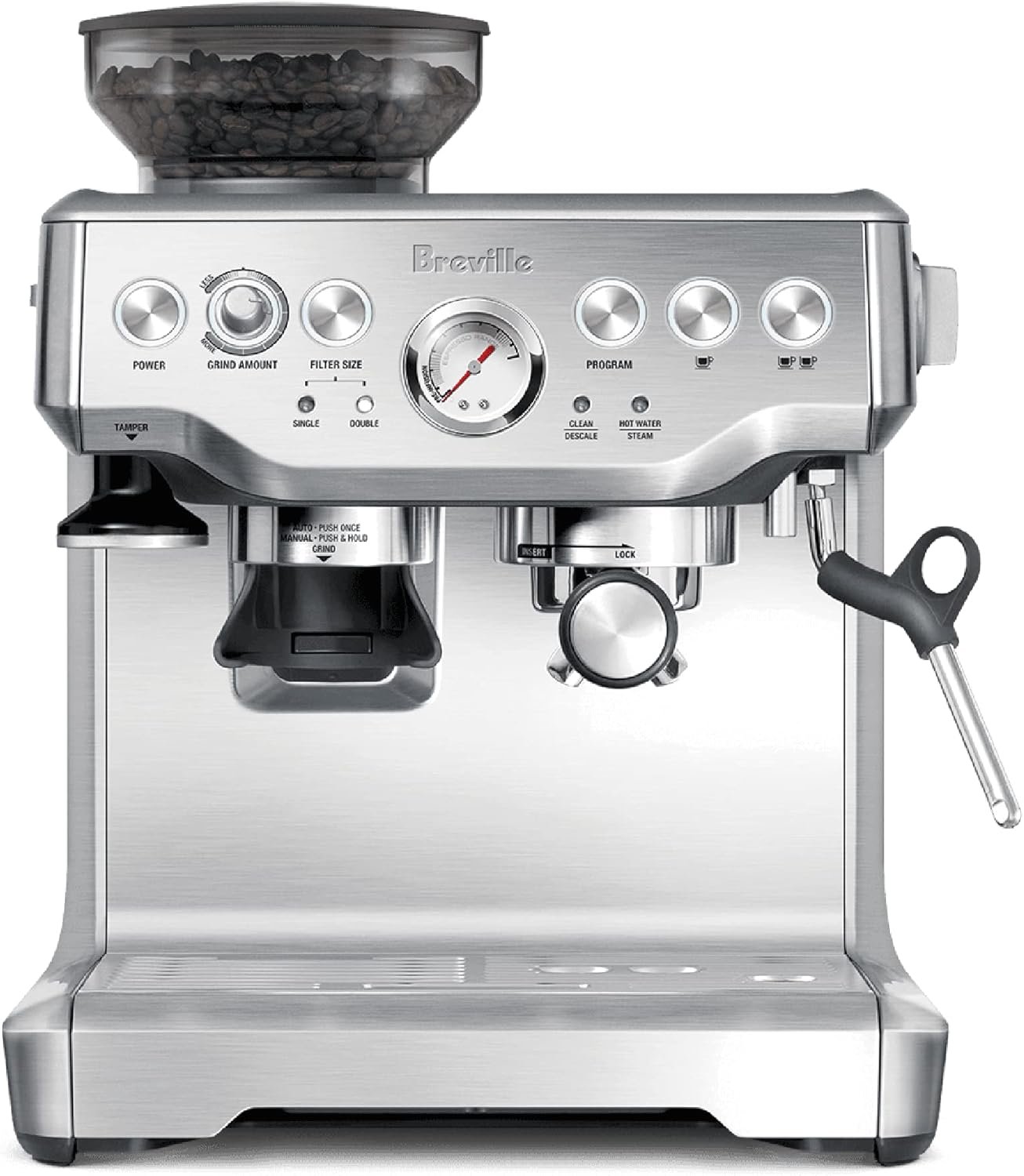
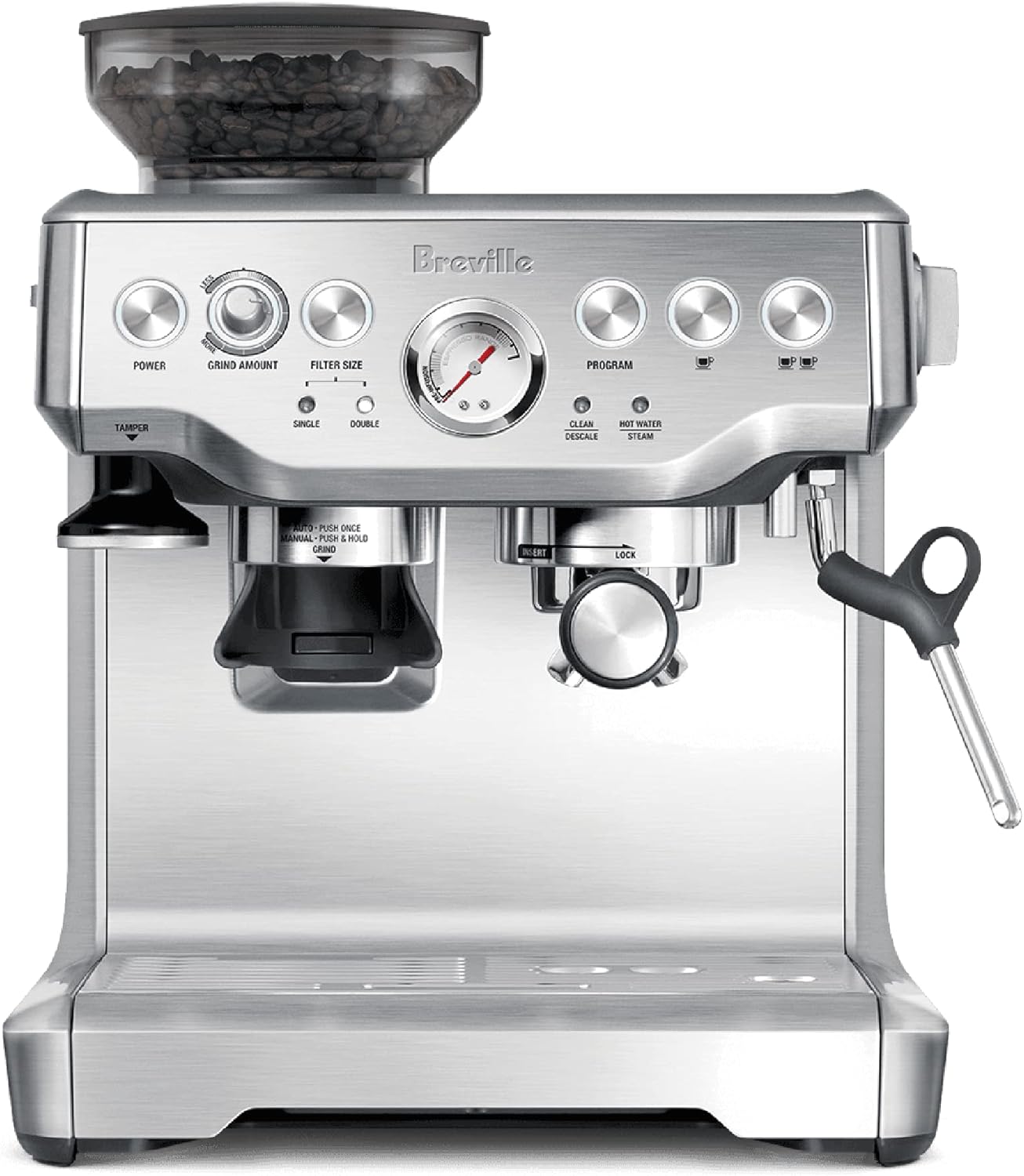
Breville Barista Express Espresso Machine BES870XL, Brushed Stainless Steel
Quick Summary: Breville Barista – Deep Dive & User Consensus
Real Comparison: Breville Barista Express BES870XL vs. Top Espresso Machines in 2025
The Breville Barista Express BES870XL is among the most recognized all-in-one espresso machines for home baristas, integrating a precision grinder, PID temperature control, and manual steam wand—all at an accessible price point. Priced at $549.95 and rated 4.4/5, this machine is a front-runner among prosumer and enthusiast espresso setups. In this technical breakdown, we’ll compare the Barista Express with rivals like the Gaggia Classic Pro, DeLonghi La Specialista, and Rancilio Silvia, analyzing design, performance, and real-world value. If you’re seeking a grinder-equipped, semi-automatic unit that balances control and approachability, this review distills what matters most—without the marketing fluff.
Quick verdict: The Barista Express continues to dominate the entry-to-mid prosumer segment, offering serious extraction for the price, but there are real trade-offs for advanced users. Read on for a rigorous analysis.
Amazon Rating
4.4/5 based on N/A customer reviews
4/5
5/5
4/5
4/5
5/5
4.4/5
⚙️ Technical Specifications
| Grinder | Integrated conical burr |
| Water Tank Capacity | 67 oz / 1.98 liters |
| Portafilter Size | 54 mm |
| Power | 1600 Watts / 120 Volts |
| PID Temperature Control | Yes |
| Warranty | 1 year limited |
⚖️ Pros & Cons from Reviews
👍 What Users Love
- ✓ Integrated, precision conical burr grinder
- ✓ Consistent PID-controlled extraction temperature
- ✓ Manual steam wand allows for true microfoam
- ✓ Streamlined, all-in-one workflow
- ✓ Comprehensive accessory kit included
👎 Common Concerns
- ✕ Grind adjustment range can be limiting for experts
- ✕ Plastic internal parts lower long-term durability
- ✕ Single boiler limits simultaneous brewing and steaming
- ✕ Noise levels typical for home grinders
How Does the Breville Barista Express BES870XL Stack Up in 2025?
Competitors at a Glance
- Gaggia Classic Pro – Classic Italian design, credible steaming, fully manual, but no built-in grinder; often paired with an external Baratza or Eureka grinder for comparable control.
- DeLonghi La Specialista – Integrated grinder, automatic tamping, sensor grinding, but more plastic build and less granular control than Breville.
- Rancilio Silvia – Iconic build, commercial-grade components, but steep learning curve, no grinder, and slower workflow for most casual users.
All these competitors target the same enthusiast demographic, but their engineering philosophies differ sharply. Breville’s Barista Express BES870XL aims for an all-in-one, digitally precise espresso workflow—making it especially attractive for home users who want both speed and customization without a counter full of separate gear.
Barista Express: Where It Wins (and Loses)
- Integration: The built-in conical burr grinder and dosing cradle shift the entire workflow onto a single device—reducing both learning curve and counter space requirements. Competitors like the Gaggia and Rancilio require premium external grinders, pushing outlay well above the BES870XL’s $549.95 sticker.
- Temperature Consistency: The PID digital temperature control—uncommon at this price point—ensures the water hits and holds the target extraction temps (crucial for repeatability and dialing in lighter roasts), setting it apart from more analog alternatives.
- Steam Wand & Microfoam: The manual wand delivers adequate steam for microfoam, enabling proper milk texturing and entry-level latte art capability. This bridges the gap between true entry-level and commercial features.
- Workflow Speed: Breville’s promise of “bean to espresso in under one minute” holds up in practice. No need to weigh, grind, and transfer—workflow is streamlined. However, this also exposes some pain points in grind retention and adjustment, as detailed below.
- Build Quality: While boasting a visually appealing brushed stainless steel fascia, the internal construction is an intentional blend of metal and plastic, trading some longevity for affordability and weight savings. The Rancilio Silvia, by contrast, offers industrial-grade heft.
- Customization Ceiling: Power users may hit the limit with grind adjustment (coarse/fine steps can feel imprecise), and the single boiler design means sequential rather than simultaneous brew/steam cycles—expected for the segment but worth noting for the hardcore enthusiast.
Technical Examination: Inside the BES870XL
- Integrated Conical Burr Grinder: The Barista Express uses a precision conical burr, engineered for consistent particle size and low heat retention. It features adjustable grind size (via a tactile dial) and grind amount, supporting a range of espresso recipes from ristretto to lungo. The grind cradle directly doses the 54mm commercial-style portafilter, minimizing transfer loss and keeping workflow efficient.
- Low Pressure Pre-infusion: Before ramping up to full 9 bar pressure, the machine gently pre-infuses the puck at lower pressure. This is key for even extraction, reducing channeling (a common amateur mistake) and allowing for richer, more balanced shots. The pre-infusion is automated, relieving new users from manual paddle management seen in Gaggia or ECM machines.
- PID Digital Temperature Control: Water is kept within a tight °C window (industry standard for specialty coffee). Unlike thermostatic control in lower-end machines, PID ensures steady water temperature—an essential spec for consistent extractions, especially with lighter, third-wave roasts prone to sour or bitter outcomes if mishandled.
- Manual Steam Wand: Breville’s articulating wand achieves dry steam at sufficient pressure to create silky microfoam. While it won’t outmuscle commercial rotary pumps, it’s leagues ahead of the faux wands bundled with super-automatics or pod systems. The wand facilitates latte art experimentation, appealing to tinkerers and perfectionists.
- Mechanical Design: The brushed stainless steel exterior is both sturdy and visually compatible with modern kitchens. Internally, key touchpoints (portafilter, basket, steam tip) are metal, but tank, drip tray, and minor mechanisms are plastic to control costs. Maintenance is DIY-friendly with accessible panels. All included accessories align with prosumer expectations—a rare completeness at this price tier.
- Water Management: The sizeable 67 oz (2-liter) water tank reduces refill frequency, and the half-pound hopper is generous for home use. Single or double shot, as well as grind and volume, are selectable through a simple interface. Routine cleaning is supported by a “clean me” light and easy disassembly. (Includes cleaning tools, filter baskets, and water filter.)
User Experience: What Owners and Reviewers Report
- Likes: Owners unanimously highlight the machine’s value proposition—offering integrated grinding, PID, and milk texturing typically reserved for pricier setups. The one-minute workflow is lauded, especially for busy mornings.
- Learning Curve: Entry-level users benefit from the semi-automatic dosing and guided extraction modes, but there is still a learning curve: dialing in grind, tamp, and shot timing is necessary for repeatable results.
- Espresso Quality: The machine regularly outperforms super-automatics and entry-level single-boiler analog units, delivering café-grade crema and taste with the right technique. The shot quality is tightly linked to bean freshness and user dialing—elementary mistakes like poor tamp yield the usual extraction artifacts (channeling, sourness).
- Steam Wand: While capable, it runs short (in height) for very large milk pitchers. Heating time after pulling a shot is marginally longer than in commercial-grade dual boiler machines. Not a deal-breaker, but a workflow touchpoint if making back-to-back milk drinks.
- Build/Parts: The finish is praised for its kitchen aesthetic. Some note the compromises: the plastic water tank, bean hopper, and certain internal parts. Long-term reliability is generally positive, but very heavy daily use may expose wear points in the grinder assembly or steam valve.
- Noise: Like most compact burr grinders, the BES870XL’s built-in grinder is audible, but in line with expectations for this motor size and style.
- Customer Support & Warranty: Breville’s 1-year limited warranty is average for the industry. Support experience is situational but often responsive, with easy access to parts and third-party tutorials.
Who Is (and Isn’t) This Machine For?
The Barista Express occupies a technical sweet spot: it’s for coffee enthusiasts who want a significant quality upgrade from pod or budget espresso makers, without the piecemeal hassle and cost of a true modular setup (e.g., separate pro grinder + machine).
- Best For:
- Home baristas after credible espresso, microfoam, and quick workflow in one box.
- Medium-sized households or anyone who wants café-grade drinks but doesn’t want to become a commercial espresso technician.
- Not Great For:
- Users seeking ultimate grind flexibility, huge batch steam power, or simultaneous brewing/steaming (dual boiler purists).
- Those expecting commercial-grade build in every component.
Realistic Downsides
- The grind size dial, while simple, has broader steps than a specialty grinder.
- Workflow can bottleneck during heavy entertaining (slow boiler transition time).
- Certain plastic parts are prone to cosmetic wear.
- Noise is typical for internal grinders but still present.
Technical Specification Table
| Specification | Value |
|---|---|
| Grinder | Integrated conical burr |
| Water Tank | 67 oz (1.98 L) |
| Bean Hopper | 1/2 lb (227 g) |
| Portafilter Size | 54 mm |
| PID Control | Yes |
| Steam Wand | Manual, microfoam capable |
| Warranty | 1 year limited |
| Power | 1600 Watts, 120 Volts |
Final Recommendation: Is the Barista Express BES870XL Still Worth It in 2025?
In a market awash with automatic and semi-automatic espresso solutions, the Breville Barista Express BES870XL remains one of the best-balanced, technically ambitious machines in its segment. It delivers espresso repeatability, proper milk texture, and versatile dosing with a genuine focus on engineering and workflow—all for substantially less than “true prosumer” two-unit combos.
Bottom line: For buyers upgrading from entry-level home espresso, or those seeking a single-box solution that doesn’t compromise on extraction quality or flexibility, the BES870XL is a leading choice. Purists and obsessive modders might demand more grind/machine customization, but for most US home baristas, Breville’s flagship can already provide coffee that’s far closer to the café experience than anything else near its price point.
Its 4.4/5 rating (Amazon) is deserving, and the machine should be top of mind for anyone wanting the best workflow-to-quality ratio in 2025. 🛒 Check Price on Amazon
Ready to Experience It Yourself?
Join thousands of satisfied customers
As an Amazon Associate we earn from qualifying purchases.